Saltwater Mix Chart (Salt by Tank Size)
How many pounds of marine salt mix you need by tank size, for reef (1.026) and fish-only (1.021) salinity. Full chart from 5 to 180 gallons with mixing tips.
Mixing saltwater is simple once you know how much salt your tank needs. Marine salt is dosed by weight against your water volume and your target salinity, with reef tanks running saltier than fish-only systems. This chart shows the pounds of marine salt mix required for common tank sizes at both reef and fish-only salinity, so you can buy the right amount and mix a fresh batch with confidence.
Quick answer: Plan on about 0.5 pounds of marine salt per gallon for a reef tank at specific gravity 1.026 (35 ppt), or about 0.42 lb per gallon for a fish-only tank at 1.021. A 55 gallon reef needs roughly 27.5 lb of salt, and a 10 gallon needs about 5 lb. These are starting amounts: always mix, dissolve, and then confirm with a refractometer. Calculate salt for any size or water change with our salt mix calculator.
Marine salt by tank size chart
Amounts are pounds of synthetic marine salt mix for the full rated volume. The reef column targets specific gravity 1.026 (about 0.5 lb/gal), and the fish-only (FOWLR) column targets 1.021 (about 0.42 lb/gal). For a water change, scale the figure to the percentage you are replacing.
| Tank size | Reef salt (1.026) | Fish-only salt (1.021) |
|---|---|---|
| 5 gallon | 2.5 lb | 2.1 lb |
| 10 gallon | 5.0 lb | 4.2 lb |
| 20 gallon | 10.0 lb | 8.4 lb |
| 29 gallon | 14.5 lb | 12.2 lb |
| 40 gallon | 20.0 lb | 16.8 lb |
| 55 gallon | 27.5 lb | 23.1 lb |
| 75 gallon | 37.5 lb | 31.5 lb |
| 90 gallon | 45.0 lb | 37.8 lb |
| 125 gallon | 62.5 lb | 52.5 lb |
| 150 gallon | 75.0 lb | 63.0 lb |
| 180 gallon | 90.0 lb | 75.6 lb |
How to read the chart
The numbers describe the rated tank volume. Because substrate, live rock, and decor displace water, your real water volume is usually 85 to 90 percent of the label, so you will often need slightly less salt than the chart shows. That is exactly why every batch should finish with a salinity check rather than a fixed scoop count. The chart gets you close; the refractometer makes it exact.
Reef tanks run at 1.026 because corals and invertebrates evolved in full-strength natural seawater, around 35 ppt. Fish-only and FOWLR systems can sit a little lower at 1.020 to 1.022, which some keepers use to reduce parasite pressure. Whichever you choose, stability beats the exact number, so pick a target and hold it. Our salt mix calculator lets you set any salinity and tank size, including partial water changes.
Salt Mixing Essentials
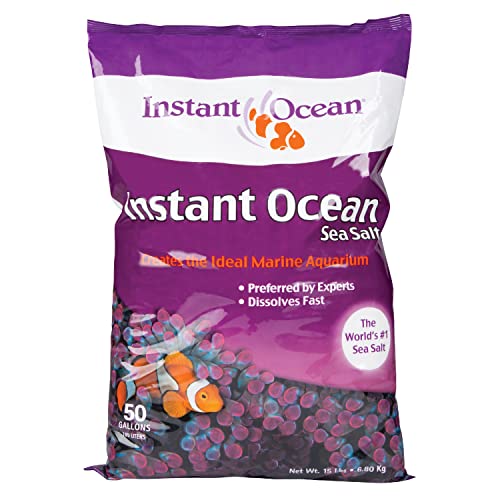
Instant Ocean Sea Salt for Marine Aquariums, Fast Dissolving (50 gal)
Industry-standard mix with all major and trace elements, no nitrate or phosphate.

Agriculture Solutions Salinity Refractometer with Automatic Temp Compensation
Read specific gravity and ppt so you mix to exactly 1.026.
Mixing saltwater the right way
Always mix in a clean bucket or brute can using RODI water, never tap water, because chlorine, metals, and nutrients in tap water harm reef life and feed algae. Bring the water to room temperature, start a powerhead, and add salt gradually rather than dumping it in. Let the batch circulate and aerate for several hours or overnight so it dissolves completely and the chemistry stabilizes before you test or use it.
Never add dry salt straight into a tank with livestock. The localized spike in salinity and the heat released as salt dissolves can burn fish and corals. Mix every batch separately, confirm salinity and temperature match your display, then perform the water change. For the full water-change rhythm and volumes, pair this with our water change calculator.
Why a refractometer matters
Salt density varies between brands, between batches, and between the top and bottom of the same bucket as it settles, so weighing alone is not enough for a reef. A refractometer reads the actual salinity of your mixed water from a few drops, and a model with automatic temperature compensation stays accurate as the sample warms. Calibrate it periodically with reference solution so your 1.026 is really 1.026.
Swing arm hydrometers are cheaper but drift badly with bubbles, deposits, and temperature, so most reef keepers upgrade to a refractometer early. Mix to your target, confirm it, and you remove the biggest source of salinity error. Keep evaporation top-offs as plain RODI water, since only fresh water leaves when water evaporates, and adding saltwater would slowly raise salinity.
More saltwater tools
To dose calcium, alkalinity, and magnesium in a reef, see our reef dosing calculator, and to size circulation, the powerhead flow calculator helps you hit reef-appropriate turnover. Every quick-lookup table lives in the reference charts hub, and the full calculators hub covers volume, filtration, and stocking.
Frequently Asked Questions
How much marine salt do I need per gallon?
For a reef tank at a specific gravity of 1.026, plan on about half a pound of marine salt mix per gallon of water, which is roughly half a cup with most brands. For a fish-only setup at 1.021, you need a little less, about 0.42 pounds per gallon. Always mix to a target salinity confirmed with a refractometer rather than trusting the scoop, since salt density varies between brands and batches.
What salinity should a saltwater tank be?
Reef tanks with corals and invertebrates do best at a specific gravity of 1.025 to 1.026, equal to about 35 ppt salinity, matching natural seawater. Fish-only or FOWLR systems can run a touch lower, around 1.020 to 1.022. The most important thing is keeping salinity stable, so top off evaporation with fresh RODI water (never saltwater) because salt does not evaporate and the level would otherwise creep up.
Why measure salt by weight instead of volume?
Salt mixes settle and compact during shipping, so a cup scooped from a fresh bag holds a different amount than a cup from the bottom of an old bucket. Weighing in pounds is far more consistent. Even so, treat any chart or scoop as a starting point: mix the salt, let it dissolve and aerate, then measure actual salinity with a refractometer and adjust with more salt or more RODI water.
Can I use table salt or aquarium salt for a marine tank?
No. Table salt is pure sodium chloride, often with anti-caking agents and iodine, and aquarium "tonic" salt is also just sodium chloride for freshwater use. A marine tank needs a synthetic sea salt mix that contains calcium, magnesium, carbonates, and dozens of trace elements that fish, corals, and invertebrates depend on. Only a true marine salt mix designed for saltwater aquariums will produce safe, balanced seawater.
How do I mix saltwater correctly?
Start with RODI water at room temperature, add salt gradually while a powerhead circulates, and never add salt directly to a tank with livestock. Let the new batch mix and aerate for several hours or overnight so it dissolves fully and stabilizes. Then check salinity with a refractometer and match the temperature to your tank before using it for a water change. Patience here prevents salinity swings that stress fish and corals.
How much salt do I need for a water change?
Calculate salt for the volume you are replacing, not the whole tank. For a 20 percent change on a 55 gallon reef, you are mixing about 11 gallons of new saltwater, which needs roughly 5.5 pounds of salt at 1.026. Mix it to the same salinity as your display so the change does not move your salinity. Our salt mix calculator does this math for any tank size and change percentage.
Planning or running a tank?
Use our free calculators and guides to get every number right.
Aquarium Planner: $39