Best Sponge Filters for Aquariums (2026)
The best aquarium sponge filters for fry, shrimp, betta, and community tanks in 2026, with picks by tank size, a comparison table, and how to size and clean them.
Sponge filters are the cheapest, gentlest, and most beginner-friendly filtration you can buy, and they are the go-to choice for fry tanks, shrimp tanks, betta homes, quarantine tanks, and quiet community setups. They grow huge colonies of beneficial bacteria, will not suck in tiny livestock, and cost a few dollars. Below are our top picks for 2026 by tank size and use, chosen from manufacturer specs and verified owner reviews, plus how to size and maintain them.
Best Sponge Filters at a Glance

AQUANEAT Bio Sponge Filter (up to 60 Gallon)
Gentle, high-surface-area filtration that grows huge bacteria colonies for any peaceful tank.

AQUANEAT 3-Pack Bio Sponge Filter (up to 10 Gallon)
Three nano sponges sized for fry, betta, and shrimp tanks where flow must stay slow.

DVHEY Large Sponge Filter with Air Stone & Ceramic Media
Two oversized dual sponges plus bio-ceramic rings for tanks up to 100-plus gallons.

AQUANEAT Bio Corner Sponge Filter (up to 55 Gallon)
Slim corner design that tucks against the glass and frees up open swimming space.
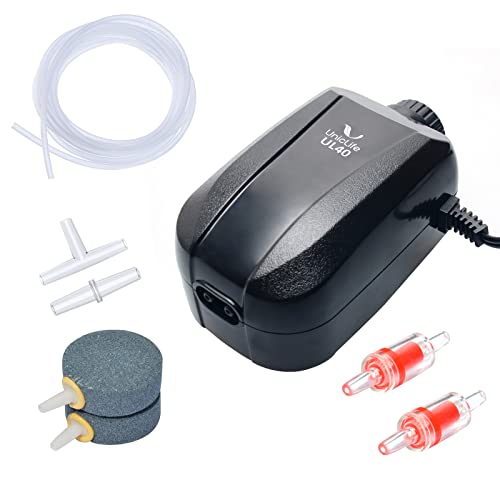
Uniclife 64 GPH Dual-Outlet Air Pump
Quiet adjustable pump with two outlets to drive one or two sponge filters at once.
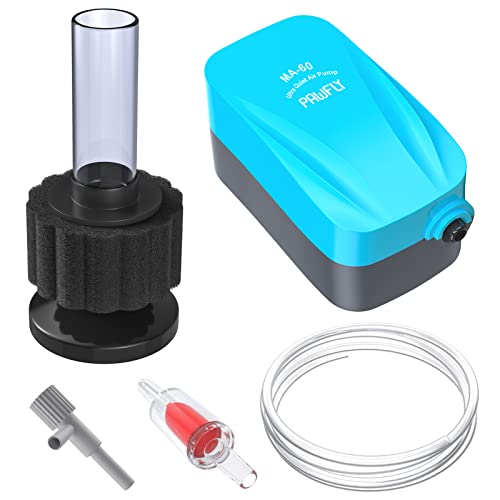
Pawfly Air Pump + Nano Sponge Filter Kit
Everything a first tank needs: pump, sponge, tubing, check valve, and control valve.
Quick comparison
| Sponge Filter | Best For | Tank Size | Air Pump Needed | Price |
|---|---|---|---|---|
| AQUANEAT Bio Sponge Filter | Most tanks | Up to 60 gal | Yes | $8.98 |
| AQUANEAT 3-Pack Nano | Fry, shrimp, betta | Up to 10 gal each | Yes | $6.98 |
| DVHEY Large w/ Ceramic Media | Big tanks | 100-120 gal | Yes | $18.99 |
| AQUANEAT Corner Sponge | Saving space | Up to 55 gal | Yes | $8.88 |
| Uniclife 64 GPH Air Pump | Driving sponges | Runs 1-2 filters | It is the pump | $14.99 |
| Pawfly Pump + Sponge Kit | First tank | Nano to 20 gal | Included | $14.99 |
The best sponge filters, reviewed
AQUANEAT Bio Sponge Filter (up to 60 Gallon): best overall
This is the sponge filter most keepers should start with. The large coarse sponge holds a tremendous amount of beneficial bacteria, the lift tube is adjustable, and it handles a wide range of tank sizes from a stocked 20-gallon to a lightly stocked 55. Owners consistently praise how quiet and reliable it runs once paired with a decent air pump. Because the sponge is replaceable and washable, running costs are near zero. It is the textbook choice for a planted community tank or a fishless cycle.
AQUANEAT 3-Pack Bio Sponge Filter (up to 10 Gallon): best for fry and shrimp
When you need ultra-gentle flow, this three-pack of nano sponges is the answer. Each unit is sized for tanks up to 10 gallons, which makes them perfect for breeding setups, shrimp colonies, betta tanks, and a row of quarantine tanks. Buying three at once means you always have a spare seeded sponge ready to jump-start a new tank, a trick experienced breeders use constantly. The slow draw will not pin fry or shrimplets against an intake.
DVHEY Large Sponge Filter with Air Stone and Ceramic Media: best for big tanks
For tanks pushing past 75 gallons, this two-pack of oversized dual-sponge filters adds serious biological capacity. Each filter stacks two sponges plus a chamber of bio-ceramic rings, and the built-in air stone improves oxygenation and bubble flow. Owners use them as the main filter on big peaceful tanks or as supplemental media inside a sump. With two filters in the box, you can run one on each end of a long tank for even circulation.
AQUANEAT Corner Sponge Filter (up to 55 Gallon): best space-saver
If a round sponge in the middle of the tank bothers you, this corner design hugs the glass and stays out of sight. It rates up to 55 gallons and comes with suction cups and airline accessories. The flat back sits flush against the corner, freeing up swimming space and hardscape room. Performance is the same gentle, bacteria-rich filtration AQUANEAT is known for, just in a tidier shape that aquascapers prefer.
Uniclife 64 GPH Dual-Outlet Air Pump: best air pump to run them
A sponge filter is only as good as the air pump driving it. This Uniclife unit pushes 64 gph through two adjustable outlets, so it can power two sponge filters or one sponge plus an air stone. Owners rate it as genuinely quiet, which matters in a bedroom or office. It ships with airline tubing and air stones to get you started, and the adjustable valve lets you dial flow down for nano tanks.
Pawfly Air Pump and Nano Sponge Filter Kit: best starter bundle
New to the hobby? This kit removes the guesswork by bundling a quiet 50-gph air pump, a nano bio sponge filter, airline tubing, a control valve, and a check valve in one box. The check valve is the part beginners forget, and it stops tank water from siphoning back into the pump during a power cut. For a first betta or shrimp tank, this is the simplest path to a fully cycled, gently filtered setup.
How we chose these sponge filters
We did not run a lab. Instead, we compared manufacturer specifications, rated gallon ranges, sponge material and porosity, and the included accessories, then weighed them against patterns in verified owner reviews. We prioritized filters with strong biological surface area, quiet operation once paired with a good pump, and replaceable sponges that keep long-term costs low. We also looked for designs that are genuinely safe for fry and shrimp, since that is the main reason keepers reach for a sponge filter in the first place.
Price-to-value mattered too. Sponge filters are inexpensive by nature, so we favored options that come ready to run or include the accessories most beginners overlook, like check valves and spare sponges. Where a product is sold as a multi-pack, we noted it, because seeded spare sponges are one of the most useful things a fishkeeper can keep on hand.
Sizing a sponge filter the right way
Filtration is about turnover, the number of times your filter cycles the whole tank volume per hour. The accepted target is 4 to 10 times tank volume per hour. Sponge filters move less water than canisters, so on larger or heavily stocked tanks you often run two sponges or pair a sponge with a hang-on-back filter to hit that range. Before you buy, run your numbers through our filter turnover calculator to see exactly how much flow your tank needs and whether one sponge will cover it.
Remember that bigger, more lightly stocked tanks are more stable and more forgiving for beginners. A sponge filter sized one step up from your tank gives you headroom for bacteria and a margin of safety if your stocking grows.
Setup and maintenance basics
Attach airline from the pump to the sponge filter's lift tube, add a check valve between them, and let the bubbles pull water through the sponge. Never add fish until the tank is fully cycled, which takes about 4 to 6 weeks with a fishless cycle. Once running, rinse the sponge every two to four weeks by squeezing it in a bucket of old tank water, never under the tap, so you keep your beneficial bacteria alive. That single habit prevents most mini-cycles and keeps ammonia and nitrite at zero.
For more on dialing in flow across all your gear, see our filter turnover calculator, and browse the rest of our aquarium gear reviews for matched air pumps, heaters, and test kits.
Aquarium Setup & Maintenance Planner
Stocking planner, water-test log, cycling tracker, maintenance schedule, and more, in one printable planner that keeps your tank on track.
Frequently Asked Questions
Are sponge filters good enough on their own?
For most peaceful community tanks, fry tanks, shrimp tanks, and betta setups, a properly sized sponge filter is plenty. It provides strong biological filtration and decent mechanical filtration. Heavily stocked tanks or messy fish like goldfish and large cichlids do better with a sponge filter paired with a hang-on-back or canister filter for extra mechanical capacity.
Do sponge filters need an air pump?
Most do. The classic design uses an air pump and airline to push bubbles up a lift tube, which pulls water through the sponge. A few sponge filters can instead connect to a powerhead or a hang-on-back intake. If you buy an air-driven sponge, budget for a quiet air pump, airline tubing, and a check valve to stop back-siphoning.
What size sponge filter do I need?
Match the sponge filter's rated gallon range to your tank, then aim for total filter turnover of 4 to 10 times your tank volume per hour. Sponge filters move less water than canisters, so in larger or stocked tanks many keepers run two units or pair one with another filter. Use our filter turnover calculator to check that your combined flow lands in the right range.
How often should I clean a sponge filter?
Rinse the sponge every two to four weeks, depending on bioload. The key rule is to squeeze it gently in a bucket of old tank water you removed during a water change, never under chlorinated tap water. Tap water kills the beneficial bacteria living in the sponge. Cleaning in tank water preserves your cycle and keeps ammonia and nitrite at zero.
Are sponge filters safe for baby fish and shrimp?
Yes, that is their signature strength. The sponge surface cannot suck in fry, shrimplets, or snails the way a powered intake can. The gentle flow also suits bettas and other long-finned fish that hate strong currents. This is why breeders and shrimp keepers rely on sponge filters more than any other filter type.
How long do filter sponges last?
A good sponge lasts a year or more with regular rinsing. Replace it when it stays clogged after cleaning, falls apart, or no longer springs back to shape. When you swap a sponge, keep the old one running alongside the new one for a few weeks if you can, so the fresh sponge has time to colonize beneficial bacteria before the old one is removed.
Planning or running a tank?
Use our free calculators and guides to get every number right.
Aquarium Planner: $39