Low-Tech Planted Tank for Beginners
Start a low-tech planted aquarium with no CO2: easy plants like java fern and anubias, the right substrate and lighting, and simple fertilizer dosing.
A low-tech planted tank uses hardy, low-light plants like java fern, anubias, cryptocoryne, and Vallisneria with modest LED lighting and light fertilizer, all without injected CO2. It is the easiest way to get a lush, natural aquarium, since these plants forgive beginner mistakes and actively improve your water quality.
You do not need pressurized gas, fancy substrate, or blinding lights to grow live plants. You need easy species, sensible lighting, and a little patience. This guide covers the no-CO2 approach from plant choice to dosing, with calculators to dial in the details.
Low-Tech Planted Essentials

Live Plants Easy Live Plant Bundle
A mixed pack of hardy, low-light beginner plants to start your aquascape.

Seachem Flourish Plant Supplement
An all-in-one liquid fertilizer for water-column feeders, dosed weekly.

Substrate fertilizer tabs that feed heavy root feeders like crypts and Vallisneria.
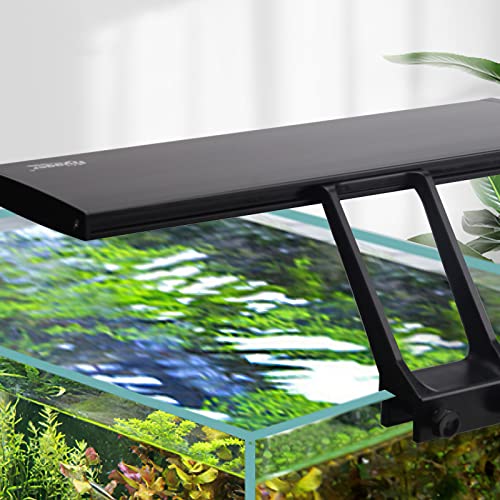
hygger Clip-On Planted LED Light
Full-spectrum LED with timer and dimming, ideal for low to moderate light tanks.
What low-tech means
Low-tech, sometimes called low-light or no-CO2, means growing plants that thrive on ambient nutrients and modest lighting without injected carbon dioxide. Growth is slower than a high-tech tank, which is exactly the point: slower growth means less algae pressure, less trimming, and far fewer ways to fail. It is the most beginner-friendly aquascaping path.
The best easy plants for beginners
Stick to species known for toughness. These four carry most beginner planted tanks.
- Java fern: A rhizome plant that attaches to rock or driftwood. Never bury the rhizome. Almost indestructible in low light.
- Anubias: Another rhizome plant with thick, dark leaves. Slow but bulletproof, and it tolerates very low light. Keep the rhizome exposed.
- Cryptocoryne: A rooted plant that comes in many colors and textures. It may melt after planting, then regrows happily. A heavy root feeder.
- Vallisneria: A fast-spreading background grass that creates a jungle look and oxygenates well. Roots in substrate and feeds heavily at the roots.
Java fern and anubias feed mostly from the water column, while cryptocoryne and Vallisneria draw heavily from the substrate, which shapes how you fertilize them.
Substrate for a low-tech tank
You do not need expensive aquasoil for easy plants. Standard inert gravel or sand works well, especially when paired with root tabs for the rooted plants. Aim for about 2 inches of depth so roots have room to anchor and spread.
Calculate exactly how much substrate to buy for your tank footprint and depth with our substrate calculator, so you order the right amount the first time.
Lighting: less is more
The biggest beginner mistake is too much light. Without matching CO2 and nutrients, excess light simply feeds algae. For low-tech tanks, a modest full-spectrum LED rated for planted tanks on a 6 to 8 hour daily timer is ideal.
Match the fixture to your tank with the lighting calculator, which factors in tank depth and your plants' light needs. A timer keeps the photoperiod consistent, which both plants and algae control depend on. If you later move to demanding plants and add CO2, our CO2 calculator sizes injection to your volume.
Fertilizer basics without CO2
Even easy plants need nutrients, and a lightly stocked tank may not supply enough on its own. Keep dosing simple and conservative.
| Fertilizer | Feeds | Best for |
|---|---|---|
| Liquid all-in-one | Water column | Java fern, anubias, floating plants |
| Root tabs | Substrate roots | Cryptocoryne, Vallisneria, swords |
| Iron supplement | Water column | Red or pale, slow-growing plants |
A common low-tech routine is a weekly liquid dose after the water change, plus root tabs pushed into the substrate near rooted plants every month or two. Dose to your real water volume, confirmed with the aquarium volume calculator, and fine-tune amounts with the fertilizer dosing calculator. Start low, since over-fertilizing a low-light tank mainly grows algae.
Putting it together
- Set up the tank fully and add about 2 inches of inert substrate. Follow how to set up a fish tank for the hardware.
- Attach java fern and anubias to hardscape with thread or glue, rhizome exposed. Plant crypts and Vallisneria in the substrate with root tabs nearby.
- Install a modest planted LED on a 6 to 8 hour timer.
- Cycle the tank before adding fish. Plants help but do not replace the nitrogen cycle.
- Begin light weekly fertilizing once plants show new growth.
- Be patient. Some melt-back is normal as plants adapt to being submerged.
Keeping it healthy
A planted tank rewards a steady routine: consistent lighting hours, weekly water changes, light fertilizing, and removing dead leaves. Plants will absorb some ammonia and nitrate, supporting water quality and giving fish natural cover. Once your easy plants are thriving, you can expand the aquascape or add gentle plant-safe fish from our best beginner fish list.
Low-tech done right looks lush, runs stable, and stays simple. Master these plants first, and the high-tech world will always be there if you want it later.
Aquarium Setup & Maintenance Planner
Stocking planner, water-test log, cycling tracker, maintenance schedule, and more, in one printable planner that keeps your tank on track.
Frequently Asked Questions
Do I need CO2 for a planted tank?
No, not for a low-tech tank. The easy plants in this guide, like java fern, anubias, and cryptocoryne, grow well without injected CO2 under modest lighting. A pressurized CO2 system speeds growth and supports demanding carpet plants, but it adds cost and complexity. Start without CO2, master the basics, and only add it later if you move to high-light, fast-growing species. Our CO2 calculator helps if you eventually upgrade.
What is the easiest live plant for beginners?
Java fern and anubias are the most forgiving plants you can buy. Both are low-light, slow-growing rhizome plants that attach to rock or driftwood rather than rooting in substrate, and both tolerate a wide range of water conditions. They do not need CO2 or special substrate. Cryptocoryne and Vallisneria are also excellent beginner choices once you have those two established.
How much light does a low-tech planted tank need?
Low-tech tanks thrive on low to moderate light, roughly 6 to 8 hours a day on a timer. Too much light without matching CO2 and nutrients mainly grows algae. A modest full-spectrum LED rated for planted tanks is plenty for easy species. Our lighting calculator helps you match a fixture to your tank depth and plant needs so you avoid the common trap of overlighting a low-tech setup.
Do beginner aquarium plants need fertilizer?
Lightly, yes. Even easy plants use nutrients, and a low-tech tank with few fish may run short on iron, potassium, and trace elements. A weekly all-in-one liquid fertilizer covers water-column feeders like java fern and anubias, while root tabs feed heavy root feeders like cryptocoryne and Vallisneria. Dose conservatively to your real water volume and adjust based on plant health and algae.
Will live plants help my fish?
Yes. Live plants absorb ammonia and nitrate, compete with algae for nutrients, oxygenate the water, and give fish and fry cover that reduces stress. A well planted tank is often more stable than a bare one. Plants do not replace the nitrogen cycle or water changes, but they support water quality and create a more natural, healthier environment for your fish.
Why are my aquarium plants melting or dying?
Some melting is normal right after planting, because plants grown above water adjust to being fully submerged and may shed old leaves before regrowing. Trim the mush and be patient. Persistent decline usually points to too little light, missing nutrients, or planting the rhizome of java fern or anubias under the substrate, which rots it. Keep rhizomes exposed, add gentle fertilizer, and give it weeks.
Planning or running a tank?
Use our free calculators and guides to get every number right.
Aquarium Planner: $39