How to Cycle a Fish Tank (Fishless)
A step-by-step fishless cycle: add an ammonia source, test daily, and wait 4 to 6 weeks for 0 ammonia, 0 nitrite, and some nitrate before adding fish.
To cycle a fish tank fishless, add a pure ammonia source to reach about 2 to 4 ppm, test the water daily, and wait until both ammonia and nitrite read 0 ppm within 24 hours while nitrate reads above zero. This usually takes 4 to 6 weeks, and it grows the beneficial bacteria your tank needs before a single fish goes in.
Fishless cycling is the safest way to start a tank because no animal is exposed to toxic ammonia or nitrite while the bacteria establish. It takes patience, but it is mostly waiting and testing. Here is exactly how to do it.
What You Need to Cycle Fishless
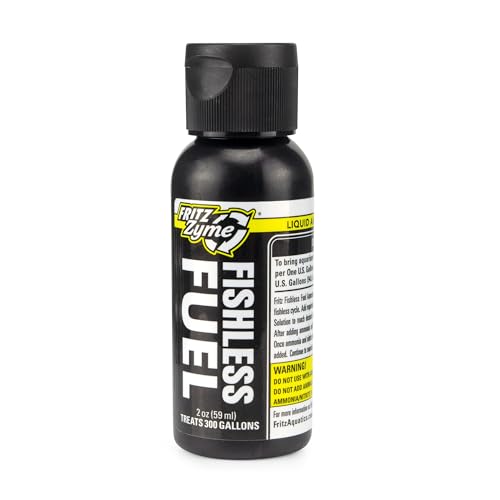
Fritz Aquatics Fishless Fuel Ammonia Source
A pure ammonia source made specifically for fishless cycling, no additives.

API Freshwater Master Test Kit
Liquid tests for ammonia, nitrite, nitrate, and pH so you can track every stage.

Seachem Stability Bottled Bacteria
Nitrifying bacteria to seed the filter and shorten the wait.

DrTim's Aquatics Ammonium Chloride for Cycling
A concentrated, natural ammonium chloride source for precise fishless dosing.
Before you start: set up the tank fully
The bacteria you are growing need a finished, running environment. Set up the tank completely before cycling.
- Fill the tank with dechlorinated water. Treat tap water with a conditioner to remove chlorine and chloramine.
- Install and run the filter 24/7. This is where most of your bacteria will live.
- Set the heater to about 78 to 80 F. Warm water speeds bacterial growth.
- Add substrate, hardscape, and any plants. Live plants help and can absorb some ammonia.
Need to confirm your real water volume for accurate dosing? Use the aquarium volume calculator, and the aquarium unit converter to switch between gallons, liters, and ppm.
Step by step: the fishless cycle
Step 1: Add an ammonia source to 2-4 ppm
Dose a pure ammonia source until your test reads roughly 2 to 4 ppm. This stand-in for fish waste feeds the first wave of bacteria. Avoid household ammonia with surfactants, dyes, or scents, and never use household cleaners. A product like Fritz Fishless Fuel is made for this.
Step 2: Optionally seed with bacteria
Add bottled nitrifying bacteria, or better yet a used sponge or media from an established, disease-free tank. This introduces living colonies and can cut the timeline significantly. Learn more in our guide to beneficial bacteria.
Step 3: Test daily and re-dose ammonia
Test ammonia, nitrite, and nitrate every day. Whenever ammonia drops, re-dose back to 2 to 4 ppm to keep feeding the bacteria. Do not let it run out, or the colonies starve, and do not push it above 5 ppm, which can stall the cycle.
Step 4: Watch for the nitrite spike
After a week or two, ammonia begins falling and nitrite rises sharply. This second spike is normal and expected. It means the first bacteria are working and the second group is now establishing. Read more in Nitrite in the Aquarium.
Step 5: Confirm the conversion
The tank is cycled when you dose ammonia to 2 to 4 ppm and, the next day, both ammonia and nitrite read 0 ppm while nitrate reads above zero. Confirm this overnight conversion for two or three days in a row to be sure.
Step 6: Big water change, then add fish slowly
Weeks of ammonia conversion leave nitrate very high, so do a large water change to bring it under 20 to 40 ppm before adding fish. Use the water change calculator to size it exactly. Then add just a few fish at a time so the bacteria can scale up to the growing bioload.
Typical fishless cycle timeline
| Phase | Ammonia | Nitrite | Nitrate | What it means |
|---|---|---|---|---|
| Days 1-7 | Rising | 0 | 0 | First bacteria starting |
| Days 8-21 | Falling | Spiking | Rising | Nitrite spike, normal |
| Days 21-35 | 0 in 24h | Falling | Climbing | Second colony catching up |
| Days 35-42 | 0 in 24h | 0 in 24h | High | Cycled, do water change |
This is a guide, not a stopwatch. Some tanks finish in three weeks with good seeding, others take seven. Trust your test kit, not the calendar.
Fish-in cycling: the riskier alternative
If fish are already in an uncycled tank, you are doing a fish-in cycle whether you planned to or not. The fish provide the ammonia, so your goal is to keep ammonia and nitrite as close to zero as possible while the bacteria establish.
- Test every day. Any time ammonia or nitrite is detectable, do a water change.
- Feed lightly, every other day, to limit waste.
- Use a conditioner that detoxifies ammonia and nitrite, such as Seachem Prime, to buy the fish a margin of safety between water changes.
Fish-in cycling is more stressful for the fish and more work for you. It is damage control, not a recommended starting method. When fish suffer from an uncycled tank, the result is often new tank syndrome.
Common cycling mistakes
- Adding fish too early. The whole point is to finish first. Wait for the zero readings.
- Dosing ammonia too high. Over 5 ppm can stall the colonies. Stay in the 2 to 4 ppm window.
- Cleaning filter media in tap water. Chlorine kills bacteria. Rinse in old tank water only.
- Skipping the final water change. Adding fish into very high nitrate stresses them from day one.
- Not understanding the science. Read The Aquarium Nitrogen Cycle Explained so the readings make sense.
For more detail at every step, see our complete fishless cycling guide, the deep dives on ammonia and nitrate, and the full Water and Care hub.
Aquarium Setup & Maintenance Planner
Stocking planner, water-test log, cycling tracker, maintenance schedule, and more, in one printable planner that keeps your tank on track.
Frequently Asked Questions
How long does it take to cycle a fish tank?
A fishless cycle typically takes 4 to 6 weeks at normal aquarium temperatures. The ammonia-eating bacteria establish in the first couple of weeks, then the nitrite-eating bacteria catch up, which is why the nitrite spike comes later. Seeding the filter with mature media or adding bottled bacteria can shorten it, but rushing past zero ammonia and zero nitrite readings is never safe.
How much ammonia should I add when cycling fishless?
Dose enough to reach about 2 to 4 ppm ammonia on your test kit, then re-dose back to that level whenever it drops. Going much higher than 5 ppm can actually stall the cycle, because extreme ammonia levels inhibit the very bacteria you are trying to grow. Use a pure ammonia source made for cycling, not household cleaners with surfactants, dyes, or perfumes.
How do I know when my tank is fully cycled?
Your tank is cycled when you can dose ammonia to 2 to 4 ppm and, within 24 hours, both ammonia and nitrite read 0 ppm while nitrate reads above zero. That overnight conversion proves both bacteria colonies are established and working together. Confirm it across two or three consecutive days before you add fish, then do a large water change to lower nitrate first.
What is fish-in cycling and is it safe?
Fish-in cycling means the fish are already in the tank as the bacteria establish, so the fish themselves provide the ammonia. It is riskier and more work because you must keep ammonia and nitrite near zero with daily testing and frequent water changes. It is the damage-control option when fish are already present, not the recommended way to start a tank.
Can I use bottled bacteria to skip the cycle?
Bottled bacteria can speed a cycle up and sometimes shorten it dramatically, but no product reliably skips it entirely. Treat the bottle as a head start, keep dosing your ammonia source, and keep testing. The cycle is only complete when your own tests confirm ammonia and nitrite convert to zero within a day. Trusting the bottle alone is how fish get hurt.
Should I do a water change before adding fish?
Yes. By the end of a fishless cycle, nitrate is usually very high from weeks of ammonia conversion. Do a large water change, often 50 percent or more, to bring nitrate under 20 to 40 ppm before adding livestock. Match the new water temperature and always dechlorinate it. Then add fish slowly, a few at a time, so the bacteria can scale up to the new bioload.
Why did my cycle stall with high ammonia but no nitrite?
A stall usually means conditions are working against the bacteria. The most common causes are ammonia dosed too high (over 5 ppm), pH that has crashed below about 6.5, water that is too cold, or chlorinated water added without conditioner. Do a partial water change to dilute ammonia, check and stabilize pH and temperature, and the cycle should resume within a few days.
Planning or running a tank?
Use our free calculators and guides to get every number right.
Aquarium Planner: $39