Ammonia in the Aquarium: Causes & Fixes
Ammonia is toxic to fish and should always read 0 ppm. Learn the causes, emergency steps to lower it fast, and how to keep it at zero for good.
Ammonia in an aquarium should always read 0 ppm, because it is toxic to fish even at low levels. Any detectable ammonia means your biological filter is not keeping up, and you should respond right away with a partial water change, a detoxifying conditioner, and less feeding while you find the cause. Ammonia is the first and most dangerous step of the nitrogen cycle.
Ammonia is produced constantly by fish waste, respiration, uneaten food, and decay. In a healthy, cycled tank, beneficial bacteria convert it to nitrite almost as fast as it appears, so your test reads zero. When ammonia shows up, the balance has broken.
Ammonia Control Toolkit
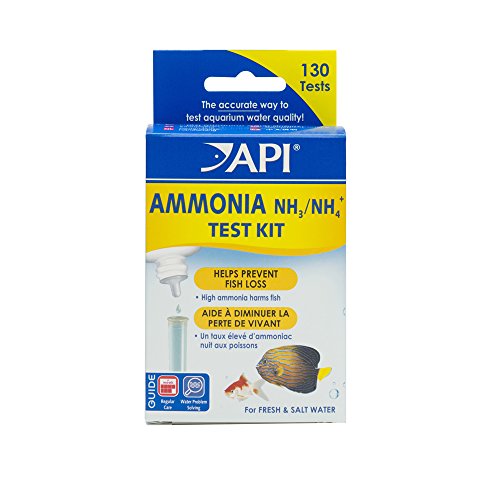
A dedicated liquid ammonia test for fast, accurate readings during an emergency.

Seachem Prime Water Conditioner
Detoxifies ammonia and nitrite for 24 to 48 hours and dechlorinates new water.

Kordon AmQuel Plus Conditioner
Instantly detoxifies ammonia, nitrite, and chloramine, a strong backup option.

API Freshwater Master Test Kit
Track ammonia, nitrite, nitrate, and pH together to see the whole picture.
Why ammonia is so toxic
Ammonia attacks fish from the outside in. It burns and inflames gill tissue, which makes it harder for fish to absorb oxygen, and it damages internal organs over time. Even low, chronic ammonia stresses fish, suppresses their immune systems, and leaves them vulnerable to disease like ich and fin rot.
There is a chemistry wrinkle worth knowing. Test kits measure total ammonia, which includes both toxic ammonia (NH3) and much milder ammonium (NH4+). Higher pH and warmer water shift the balance toward the toxic form, so the same reading is more dangerous in a high-pH tank. This is why ammonia is part of the bigger picture in the aquarium nitrogen cycle.
Common sources of ammonia
- An uncycled tank. New tanks have no bacteria to process waste, the classic cause of new tank syndrome.
- Overfeeding. Uneaten food rots and releases ammonia. This is the most common avoidable cause.
- Overstocking or adding fish too fast. Too much bioload at once overwhelms the bacteria.
- A dead fish or rotting plant. Decaying organic matter spikes ammonia quickly.
- Filter problems. A filter that stopped running, or media replaced or cleaned too aggressively, kills off bacteria.
- Tap water. Some municipal water contains chloramine, which breaks down into ammonia when treated.
Emergency steps to lower ammonia
If you have fish and a positive ammonia reading, act in this order.
- Do a water change now. Change 25 to 50 percent with dechlorinated, temperature-matched water to dilute ammonia immediately. Use the water change calculator to size it precisely.
- Dose a detoxifying conditioner. A product like Seachem Prime converts ammonia to a less toxic form for about 24 to 48 hours, protecting fish while you stabilize the tank.
- Stop feeding. Skip food for one or two days. Fish are fine without it, and you cut off a major ammonia source.
- Remove decaying matter. Find and remove any dead fish, rotting plants, or trapped food.
- Check the filter. Make sure it is running and has not been over-cleaned recently.
- Keep testing daily. Repeat water changes until ammonia is back to 0 ppm.
Ammonia response guide
| Ammonia reading | Risk to fish | What to do |
|---|---|---|
| 0 ppm | Safe | Maintain normal care |
| 0.25-0.5 ppm | Stressful | Water change, dose conditioner, reduce feeding |
| 1-2 ppm | Harmful | Large water change now, detoxify, find the cause |
| Over 2 ppm | Dangerous | Emergency water change, detoxify, daily monitoring |
Use the aquarium unit converter if you need to translate between ppm, gallons, and liters while figuring out doses for your real water volume.
How to keep ammonia at zero for good
- Cycle the tank before adding fish. A fishless cycle builds the bacteria first. See how to cycle a fish tank and our fishless cycling guide.
- Feed sparingly. Offer only what fish eat in a couple of minutes, once a day, and remove leftovers.
- Stock slowly and within limits. Add a few fish at a time so the bacteria can scale up.
- Maintain the filter gently. Rinse media in old tank water, never tap water, and never replace it all at once.
- Always dechlorinate. Treat every drop of new water, especially if your supply uses chloramine.
- Test regularly. A weekly check catches problems before fish suffer.
After ammonia: the rest of the cycle
Once ammonia is under control, the bacteria convert it to nitrite, which is the next toxic hurdle, and then to nitrate. Continue with Nitrite in the Aquarium and Nitrate in the Aquarium, and explore the full Water and Care hub for pH, hardness, and more. Remember: ammonia is educational ground for healthy tanks, but a sick or gasping fish needs prompt action, and a local fish store or aquatic vet can help if symptoms persist.
Aquarium Setup & Maintenance Planner
Stocking planner, water-test log, cycling tracker, maintenance schedule, and more, in one printable planner that keeps your tank on track.
Frequently Asked Questions
What is a safe ammonia level for an aquarium?
The only safe ammonia level is 0 ppm. Ammonia is toxic to fish even at low concentrations, and there is no amount you should accept as normal in a healthy tank. Any detectable reading means your biological filter is not keeping up, so you should act with a water change and find the cause. A cycled, well-maintained tank reads zero ammonia consistently.
Why is there ammonia in my cycled tank?
A sudden ammonia reading in a cycled tank usually means something disrupted the bacteria or overloaded them. Common causes are overfeeding, a dead fish or rotting plant, adding too many fish at once, overcleaning or replacing filter media, or a filter that stopped running. This is often called a mini-cycle. Do a water change, fix the cause, and the bacteria will recover.
How do I lower ammonia fast in an emergency?
Do an immediate partial water change of 25 to 50 percent with dechlorinated, temperature-matched water to dilute the ammonia. Dose a conditioner that detoxifies ammonia, such as Seachem Prime, to make remaining ammonia less harmful for about 24 to 48 hours. Stop feeding for a day or two, remove any decaying matter, and keep testing daily until ammonia returns to zero.
Does a water conditioner remove ammonia?
Some conditioners temporarily detoxify ammonia rather than remove it. Products like Seachem Prime or Kordon AmQuel Plus convert ammonia into a less toxic form for roughly 24 to 48 hours, which buys your fish time and lets the bacteria catch up. They do not replace water changes or a working biological filter, so use them as emergency support, not a permanent fix.
Is ammonia or ammonium more dangerous?
Ammonia (NH3) is the toxic form, while ammonium (NH4+) is far less harmful. Test kits measure total ammonia, and the balance between the two shifts with pH and temperature. Higher pH and warmer water push more toward toxic ammonia, so the same total reading is more dangerous in a high-pH tank. This is one reason a sudden pH change can make an existing ammonia problem worse.
Can high ammonia kill fish?
Yes. Ammonia burns gill tissue, damages organs, and reduces a fish ability to take in oxygen, and high enough levels are fatal. Warning signs include gasping at the surface, red or inflamed gills, lethargy, clamped fins, and loss of appetite. If you see these alongside an ammonia reading, treat it as an emergency with an immediate water change and a detoxifying conditioner.
Planning or running a tank?
Use our free calculators and guides to get every number right.
Aquarium Planner: $39