Beneficial Bacteria in the Aquarium
Where beneficial bacteria live, how to protect them so your biological filter stays healthy, and how to seed a new tank to speed up cycling.
Beneficial bacteria are the invisible engine of every healthy aquarium. They live mostly on your filter media and substrate, not in the water, and they convert toxic ammonia from fish waste into nitrite and then into far less harmful nitrate. Protect them by never rinsing filter media in chlorinated tap water, never replacing all your media at once, and keeping the filter running. Lose this colony and your tank effectively becomes uncycled, putting fish at immediate risk.
These microbes are what make the difference between water that quietly processes waste and water that turns deadly. Understanding where they live and what kills them is the heart of keeping fish alive long term.
Bacteria and Bio-Filtration Essentials

API Quick Start Nitrifying Bacteria
Bottled live bacteria to seed a new tank or recover a colony after a setback.

Seachem Stability Bacteria Supplement
Blend of bacteria that helps establish and maintain the biological filter.
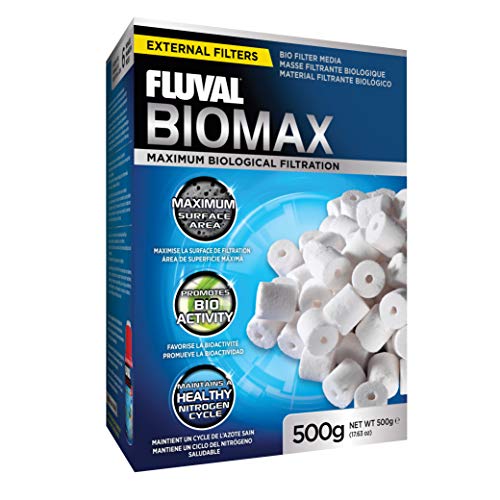
Fluval BioMax Bio Filter Media
Porous ceramic media that gives bacteria huge surface area inside your filter.

AQUANEAT Bio Sponge Filter Media
Cut-to-size foam that traps debris and hosts a dense bacteria colony.
What beneficial bacteria actually do
Fish produce ammonia constantly through waste and respiration, and uneaten food and decay add more. Ammonia is toxic even at low levels, so something has to neutralize it. That job belongs to two main groups of nitrifying bacteria. The first converts ammonia into nitrite, which is also toxic. The second converts nitrite into nitrate, which is much safer and is removed by your weekly water changes.
This whole chain is the nitrogen cycle, and the bacteria are its workforce. When people say a tank is cycled, they mean these colonies are large enough to process all the ammonia produced before it can harm fish. For the full picture, read our guide to the aquarium nitrogen cycle.
Where the bacteria live
Beneficial bacteria are not free-floating; they anchor themselves to surfaces where oxygen-rich water flows past. The more surface area and flow, the bigger the colony a spot can support.
| Location | How important |
|---|---|
| Filter media (sponge, ceramic, bio rings) | Largest colony, your main biological filter |
| Substrate (gravel, sand) | Significant secondary colony |
| Decor, rocks, driftwood | Helpful supporting surface area |
| Glass and plant leaves | Minor but present |
| Open water column | Almost none |
This is why your filter is the heart of the system. Porous bio media like ceramic rings or open-cell foam exists specifically to maximize surface area, packing an enormous colony into a small space. It is also why a normal water change removes hardly any bacteria: there are barely any in the water to begin with.
How to protect your beneficial bacteria
Most bacterial crashes are self-inflicted. A few simple habits keep the colony thriving.
Never rinse media in tap water
Chlorine and chloramine in tap water kill nitrifying bacteria on contact. When filter media gets clogged, swish it gently in a bucket of old tank water you just removed during a water change. This clears debris without harming the colony.
Do not over-clean
A filter does not need to look spotless. Aggressive scrubbing or replacing media too often strips away the very colony you depend on. Clean only when flow noticeably slows, and clean gently.
Replace media gradually
If old media is falling apart and must be replaced, add the new media alongside the old for a few weeks so bacteria can migrate onto it before you remove the original. Swapping everything at once removes most of your biological filter overnight.
Keep the filter running and the water dechlorinated
Bacteria need constant oxygenated flow, so avoid leaving the filter off for long. Always treat new water with conditioner, and avoid stacking a deep filter cleaning and a big water change on the same day.
Seeding a new tank to speed up cycling
You do not have to wait the full 4 to 6 weeks for bacteria to build up from nothing. Seeding transfers an existing colony into your new tank so it has a head start.
- Borrow established media. A piece of sponge or a handful of bio media from a healthy, disease-free tank is the gold standard. Put it in your new filter.
- Transfer substrate. A cup of gravel or sand from an established tank carries plenty of bacteria.
- Use bottled bacteria. A quality bacteria starter adds live nitrifiers directly and can cut cycling time significantly, especially if you cannot source established media.
- Add a filter to a running tank first. If you have another tank, run the new filter on it for a few weeks before moving it over.
Seeding only works if there is food for the bacteria. They still need a steady ammonia source to grow into a full colony, which is why seeding pairs naturally with a fishless cycle. Walk through the full process in how to cycle a fish tank, and verify your real water volume with the aquarium volume calculator so any dosing is accurate.
Signs your bacteria are struggling
You cannot see the colony, but your test kit can. Detectable ammonia or nitrite in an established tank is a warning that the biological filter has been disrupted, often after over-cleaning, a media swap, a power outage, or a medication. If that happens, do a water change, stop overfeeding, and consider dosing bottled bacteria to help the colony rebuild. With the cause fixed, nitrifying bacteria recover, and your readings will return to zero.
Aquarium Setup & Maintenance Planner
Stocking planner, water-test log, cycling tracker, maintenance schedule, and more, in one printable planner that keeps your tank on track.
Frequently Asked Questions
Where do beneficial bacteria live in an aquarium?
The vast majority of beneficial bacteria live on surfaces, not floating in the water. Your filter media holds the largest colony because it has high surface area and constant oxygen-rich flow. They also coat the substrate, decor, glass, and plant leaves. Because they cling to surfaces, you keep your biological filter by protecting those surfaces, especially the filter media, rather than by treating the water itself.
Can I wash filter media in tap water?
No. Tap water contains chlorine or chloramine that kills beneficial bacteria, so rinsing media under the tap can wipe out much of your biological filter and trigger an ammonia spike. When media gets clogged, gently swish it in a bucket of old tank water you removed during a water change. This rinses off debris while keeping the bacteria alive and active.
How long does it take to grow beneficial bacteria?
Building a full colony from scratch through the nitrogen cycle typically takes 4 to 6 weeks. The bacteria reproduce relatively slowly and need a steady ammonia source plus oxygen and warmth to multiply. You can speed this up dramatically by seeding the new tank with established media, substrate, or a bottled bacteria starter, which can shorten cycling to as little as one to two weeks.
Will beneficial bacteria die if the filter stops?
They begin to suffer once flow stops, because they depend on oxygen-rich water moving through the media. A short outage of an hour or two is usually fine. After several hours without flow, the colony starts to die off and can foul the media, so during a power cut, remove the media and keep it in oxygenated tank water. Never restart a filter that has sat off for a long time without rinsing the media first.
Does bottled bacteria really work?
Quality bottled bacteria can genuinely jump-start a tank by adding live nitrifying organisms, and many keepers use it to shorten cycling or recover after a crash. Results vary by product, freshness, and storage, so it is a helpful boost rather than a guaranteed instant cycle. The most reliable seeding method remains transferring established media or substrate from a healthy tank, with bottled bacteria as a strong backup.
How do I avoid killing my beneficial bacteria?
Protect the colony by never rinsing media in tap water, never replacing all your media at once, and never deep-cleaning the filter and doing a large water change on the same day. Avoid most medications and disrupters where possible, keep the filter running, and always dechlorinate new water. In short, leave the biological filter alone as much as you can and clean it gently when you must.
Planning or running a tank?
Use our free calculators and guides to get every number right.
Aquarium Planner: $39